
Neighbourhood guide · Toronto & the GTA
Living in Downtown Toronto: Neighbourhood & Real Estate Guide
Moving downtown? Toronto core neighbourhoods, 2026 condo and house prices, transit, schools and lifestyle, plus honest pros and cons.
By Irina Marchenkova, Sales Representative, RE/MAX Realtron Realty · Seniors Real Estate Specialist (SRES®) · Last updated September 2026
Downtown Toronto is the country’s biggest and busiest urban core: the Financial District’s towers, the Entertainment District’s theatres and restaurants, historic neighbourhoods like Kensington Market and the St. Lawrence Market area, and a waterfront lined with condos, parks and trails. For people who want to walk to work, dinner and a show, nowhere in Canada compares.
This guide covers downtown’s neighbourhoods, condo and home prices, transit, schools, lifestyle and the honest pros and cons.
Neighbourhoods Prices Market Costs Transit Schools Checklist FAQ
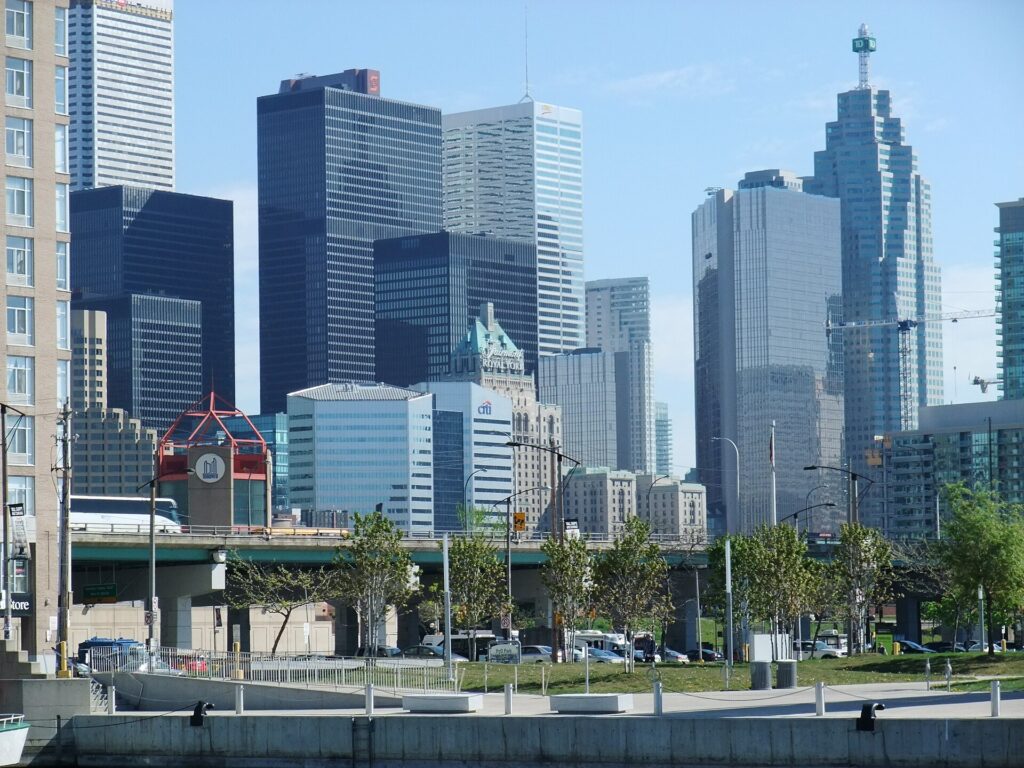

Downtown Toronto at a glance
- Where: Central Toronto, roughly from the lake north to Bloor Street and from Bathurst Street east to the Don Valley
- Homes: Mostly condominiums, plus Victorian row houses, lofts and townhouses
- Transit: Line 1 and Line 2 subways, streetcars, Union Station with GO Transit and the UP Express to Pearson
- Best for: Professionals, students, investors, downsizers and anyone who wants a car-free lifestyle
- Big draws: Walk-to-work convenience, the waterfront, sports, theatre, dining and nightlife
Why people choose Downtown Toronto
Walk everywhere. Many downtown residents walk or bike to work, and groceries, restaurants, gyms and entertainment are steps away.
Unmatched transit. Two subway lines, a dense streetcar network and Union Station put the whole region within reach, including Pearson Airport by UP Express.
Culture and entertainment. Theatres, concert halls, galleries, museums, pro sports and some of Canada’s best restaurants are all here.
Strong rental demand. Proximity to jobs, universities and hospitals keeps downtown condos popular with tenants and investors.
Downtown condos vary more than people expect. Floor plan, exposure, maintenance fees and the building’s reserve fund all matter as much as the address, so I always review the status certificate carefully with my buyers.
— Irina Marchenkova
Downtown Toronto neighbourhoods
🏙 Buying a condo downtown? My condo site has a map and profiles of 52 downtown and waterfront condo buildings, from CityPlace and South Core to St. Lawrence and Corktown.
Downtown is a patchwork of distinct neighbourhoods:
Financial District
The heart of Canada’s banking and finance industries, with office towers, the PATH underground walkway and luxury condos steps from Union Station.
Entertainment District & King West
Theatres, TIFF Bell Lightbox, restaurants and nightlife, with a dense cluster of newer condos along King and Adelaide.
Kensington Market & Chinatown
A bohemian, walkable neighbourhood of eclectic shops, vintage stores and diverse food, with Victorian row houses and nearby condos.
St. Lawrence & Old Town
Historic streets around St. Lawrence Market and the Distillery District, with lofts, condos and heritage buildings.
CityPlace, Fort York & the Waterfront
Modern condo communities near the lake, Harbourfront, Canoe Landing Park and the Rogers Centre.
Cabbagetown & Church-Wellesley
East-side neighbourhoods with Victorian homes, tree-lined streets and a strong community feel.
Looking for a downtown condo or pre-construction project? My dedicated condo site, irinasellscondos.ca, has more.
Homes and prices in Downtown Toronto
Downtown’s housing includes:
- Condominiums, from studios to penthouses, which make up most downtown sales
- Hard and soft lofts in converted warehouses and newer buildings
- Victorian and Edwardian row houses in Cabbagetown, Kensington and nearby
- Townhouses, including stacked and condo townhouses
- Pre-construction condos across the core
Downtown benchmark prices (September 2026)
Downtown falls mainly into TRREB’s C01 (west and central core) and C08 (east core) districts:
| District | Main neighbourhoods | All homes | Detached | Townhouse | Condo apt. |
|---|---|---|---|---|---|
| C01 | Financial District, Entertainment District, Kensington-Chinatown, Waterfront, Niagara | $645,400 | $1,624,400 | $683,900 | $550,600 |
| C08 | Church-Yonge Corridor, Cabbagetown, Moss Park, Regent Park | $546,800 | $1,810,400 | $828,000 | $497,900 |
| City of Toronto | All districts | $908,200 | $1,417,600 | $714,700 | $543,800 |
Benchmark prices describe a “typical” home and can differ from any individual sale. Because most downtown homes are condos, the “all homes” benchmark sits below the Toronto average. C01 was down 5.87% and C08 down 7.49% year over year in September 2026, so condo buyers have more choice and negotiating room than in years. Ask me for recent sold prices in specific buildings.
Thinking of selling? Get a free home evaluation and I’ll show you what comparable homes near you have actually sold for.
Market snapshot
Here’s how many homes sold and at what prices in September 2026, for all home types combined:
| Area | Homes sold | Average price | Median price |
|---|---|---|---|
| Toronto Central (incl. North York & downtown) | 924 | $1,102,955 | $721,000 |
| City of Toronto | 1,937 | $1,034,320 | $810,000 |
| All TRREB (GTA) | 5,040 | $1,006,409 | $860,000 |
Across the whole GTA in September 2026, homes sold for about 98% of their final list price on average and spent an average of 34 days on the market. GTA sales were down 9.0% from a year earlier and the average price was down 5.1%, so buyers have more choice and negotiating room than in recent years. For the latest numbers on a specific street or building, ask me for a free market report.
What it costs to buy in Downtown Toronto
Land transfer tax
Because Downtown Toronto is in the City of Toronto, buyers pay two land transfer taxes: Ontario’s and Toronto’s municipal land transfer tax. Here’s what that looks like at typical prices:
| Example purchase | Ontario LTT | Toronto LTT | Total | First-time buyer pays |
|---|---|---|---|---|
| Victorian row house at $1,650,000 | $29,475 | $29,475 | $58,950 | $50,475 |
| Condo apartment at $550,000 | $7,475 | $7,475 | $14,950 | $6,475 |
First-time buyers can get a refund of up to $4,000 on the Ontario land transfer tax and a rebate of up to $4,475 on the Toronto tax (together up to $8,475). You (and your spouse) must never have owned a home anywhere in the world. Land transfer tax is paid on closing, on top of your down payment, so budget for it along with legal fees, title insurance and moving costs.
Property taxes
Toronto’s residential property tax rate is 0.767311% (2026 final rate, City of Toronto), or about $767 a year for every $100,000 of assessed value. In Ontario, property tax is based on your home’s MPAC assessed value, which is still based on January 1, 2016 values and is usually well below today’s market price. You can find a home’s assessment on its latest tax bill or through MPAC.
| MPAC assessed value | Approximate yearly property tax |
|---|---|
| $400,000 | $3,069 |
| $600,000 | $4,604 |
| $800,000 | $6,138 |
| $1,000,000 | $7,673 |
Getting around
- Subway: Line 1 loops through downtown (Union, King, Queen, Dundas, St. Andrew, Osgoode and more), and Line 2 runs along Bloor.
- Streetcars: Routes along King, Queen, Dundas, College, Spadina and Bathurst.
- Union Station: GO Transit trains to the whole region and the UP Express to Pearson Airport.
- Ontario Line (future): Under construction through downtown to connect Exhibition Place and the Science Centre.
- Cycling: Separated bike lanes and Bike Share Toronto stations throughout the core.
Schools and family life
Downtown is served by the Toronto District School Board and Toronto Catholic District School Board, with French-language options through Viamonde and MonAvenir. Check the TDSB school locator for any address.
The University of Toronto, Toronto Metropolitan University, OCAD University and George Brown College are all downtown, along with major hospitals including Toronto General, Mount Sinai, St. Michael’s and SickKids.
Child care
Licensed child care in Ontario is far more affordable than it was a few years ago. At centres enrolled in the Canada-wide Early Learning and Child Care program, fees for children under 6 are capped at $22 a day in 2026, and families with lower incomes can apply for a fee subsidy that reduces the cost further. (The long-promised $10-a-day average has not yet been reached in Ontario.)
In Toronto, the City’s online child care system lets you search licensed centres, see their quality ratings and join waitlists, and you can apply for a fee subsidy through Toronto Children’s Services.
My tip: get on waitlists as early as possible, ideally several months before you move or before parental leave ends, and ask each centre whether it’s enrolled in the reduced-fee program.
- Ontario: Find and pay for child care: search licensed centres province-wide and learn about fee subsidies
- City of Toronto: Licensed Child Care: search centres, see quality ratings, join waitlists and apply for a fee subsidy
Parks, shopping and things to do
- Harbourfront and the waterfront trail
- St. Lawrence Market and the Distillery District
- Sports and concerts: the Rogers Centre and Scotiabank Arena
- Culture: the Art Gallery of Ontario, theatres and TIFF Bell Lightbox
- Shopping: CF Toronto Eaton Centre and Queen Street West
- Toronto Islands: a short ferry ride away
- CN Tower: the city’s famous landmark, with the EdgeWalk and 360 restaurant
- Royal Ontario Museum: world cultures and natural history at Bloor and Queen’s Park
- Ripley’s Aquarium of Canada: next to the CN Tower
- Hockey Hall of Fame: at Brookfield Place
- Nathan Phillips Square: the Toronto sign, events and outdoor skating at City Hall
- Trinity Bellwoods Park: a popular west-downtown park for picnics and people-watching
Pros and cons of living in Downtown Toronto
Pros
- Walk or bike to work and amenities
- Best transit access in the region
- Culture, dining and entertainment on your doorstep
- Strong rental demand for investors
- Condos available at many price points
Cons
- Smaller living spaces for the price
- Condo fees and building quality vary
- Noise, crowds and construction
- Parking is limited and expensive
- Detached homes are rare and very expensive
Before you buy in Downtown Toronto: local checklist
Every area has its own rules and quirks. Here’s what I check with buyers in Downtown Toronto:
- Condo due diligence: review the status certificate, reserve fund, maintenance fees, parking and locker ownership, and any special assessments.
- Short-term rentals: Toronto only allows short-term rentals in your principal residence, with registration, so don’t count on Airbnb income from an investment condo.
- Pre-construction: understand deposit schedules, occupancy fees and closing adjustments such as development charges before signing.
- Toronto Vacant Home Tax: every Toronto homeowner must file a yearly occupancy declaration; homes left vacant more than six months can be taxed at 3% of assessed value.
- Heritage: check whether the home is on Toronto’s Heritage Register or in a Heritage Conservation District, which can limit exterior changes.
- Older homes: homes built before the mid-1950s may still have a lead water service pipe, knob-and-tube wiring or galvanized plumbing, so a thorough home inspection is essential.
- Non-Canadian buyers: check the current federal foreign-buyer rules and Ontario’s 25% Non-Resident Speculation Tax and Toronto’s 10% Municipal Non-Resident Speculation Tax before making an offer.
Buying or selling in Downtown Toronto with Irina
I’m a RE/MAX Realtron Realty Sales Representative and Seniors Real Estate Specialist (SRES®). Whether you’re buying your first condo, investing in a rental unit or selling a downtown home, I’ll give you honest, local advice about downtown Toronto, in English or Russian.
- Buying with Irina: how I help buyers find the right home and negotiate well
- Selling with Irina: pricing, preparation and marketing that gets results
- Pre-construction: new condos and homes across the GTA
- Free home evaluation: find out what your home is worth today
- First-time buyer guide, mortgage pre-approval and closing costs: plan your budget before you shop
- New to Canada? My guide to buying a home as a newcomer
Call or text 416-846-8064 or email irina@loveurlife.ca, or send me a message below.
Plan your move to Downtown Toronto
Where is Downtown Toronto?
Gold pin: Downtown Toronto. Click any white pin to open that neighbourhood’s guide.
What would I pay each month?
Start from a typical Downtown Toronto price (MLS® HPI benchmark, September 2026) or type your own:
The 4.5% interest rate is only an example; use the rate your lender or mortgage broker quotes. 30-year amortizations on insured mortgages are for first-time buyers and new builds. Toronto buyers pay both Ontario and Toronto land transfer tax. This is an estimate, not financial advice.
How have prices changed this year?
Typical price for all home types in TRREB district C01: $645,400 in September 2026, -5.5% since October 2025 ($682,800).
MLS® Home Price Index composite benchmark, October 2025 to September 2026. Source: TRREB Market Watch. Hover over a point to see that month’s figure.
Check your commute
Live travel times from Google Maps, starting in Downtown Toronto. Tip: check at the time of day you’d actually travel.
Downtown Toronto real estate FAQ
How much does a condo cost in downtown Toronto?
In September 2026, TRREB’s benchmark price for a typical condo apartment was $550,600 in the C01 district and $497,900 in C08. Prices vary widely by building, size, view and amenities.
Is it a good time to buy a downtown condo?
Downtown condo prices were down year over year in September 2026 (C01 composite down 5.87%, C08 down 7.49%), giving buyers more choice and negotiating power. The right building and floor plan matter a lot.
What is the best way to get around downtown Toronto?
Most residents walk, cycle or take transit. Line 1 and Line 2 subways, streetcars and Union Station’s GO and UP Express services cover almost every trip.
Which downtown neighbourhoods are best for families?
Families often look at Cabbagetown, the St. Lawrence neighbourhood and areas near parks and schools. Larger condos and townhouses are more family-friendly than small units.
Do you pay extra land transfer tax downtown?
Yes. Like all of the City of Toronto, downtown buyers pay both the Ontario land transfer tax and the Toronto municipal land transfer tax, with rebates available for eligible first-time buyers.
Useful links
Official sources and local resources I recommend to buyers and sellers (links open in a new tab):
- City of Toronto
- Toronto property tax rates: 2026 rates
- Toronto municipal land transfer tax: rates and fees
- Toronto first-time buyer land transfer tax rebate
- Ontario first-time buyer land transfer tax refund
- Toronto Vacant Home Tax: yearly occupancy declaration
- MPAC: look up a property’s assessed value
- TDSB school locator: find your public schools
- Toronto Catholic District School Board
- Fraser Institute school rankings: compare Ontario school results
- TTC: subway, streetcar and bus routes
- GO Transit: regional trains and buses
- Toronto and Region Conservation Authority (TRCA): check if a property is in a regulated area
- TRREB Market Watch: monthly GTA sales and price data
- UP Express: Union Station to Pearson Airport
Explore nearby areas
- West Toronto: High Park, the Junction and Liberty Village
- Toronto Islands: island living a ferry ride away
- The Beaches: lakeside living in the east end
- Lawrence Park: prestigious North Toronto
- All area guides: every neighbourhood guide in one place
- Interactive map: see every area on one clickable map
- Annex & Yorkville
Compare neighbourhoods: Most affordable areas · Best for families · Best for downsizing · First-time buyer guide · Downsizing guide · All neighbourhood guides
🏙 Looking for a condo here? See Irina’s building-by-building Downtown Toronto, Waterfront & Corktown condo guide on IrinaSellsCondos.ca.